Bedding Guide
How to Match a Fitted Sheet to Your Mattress Depth
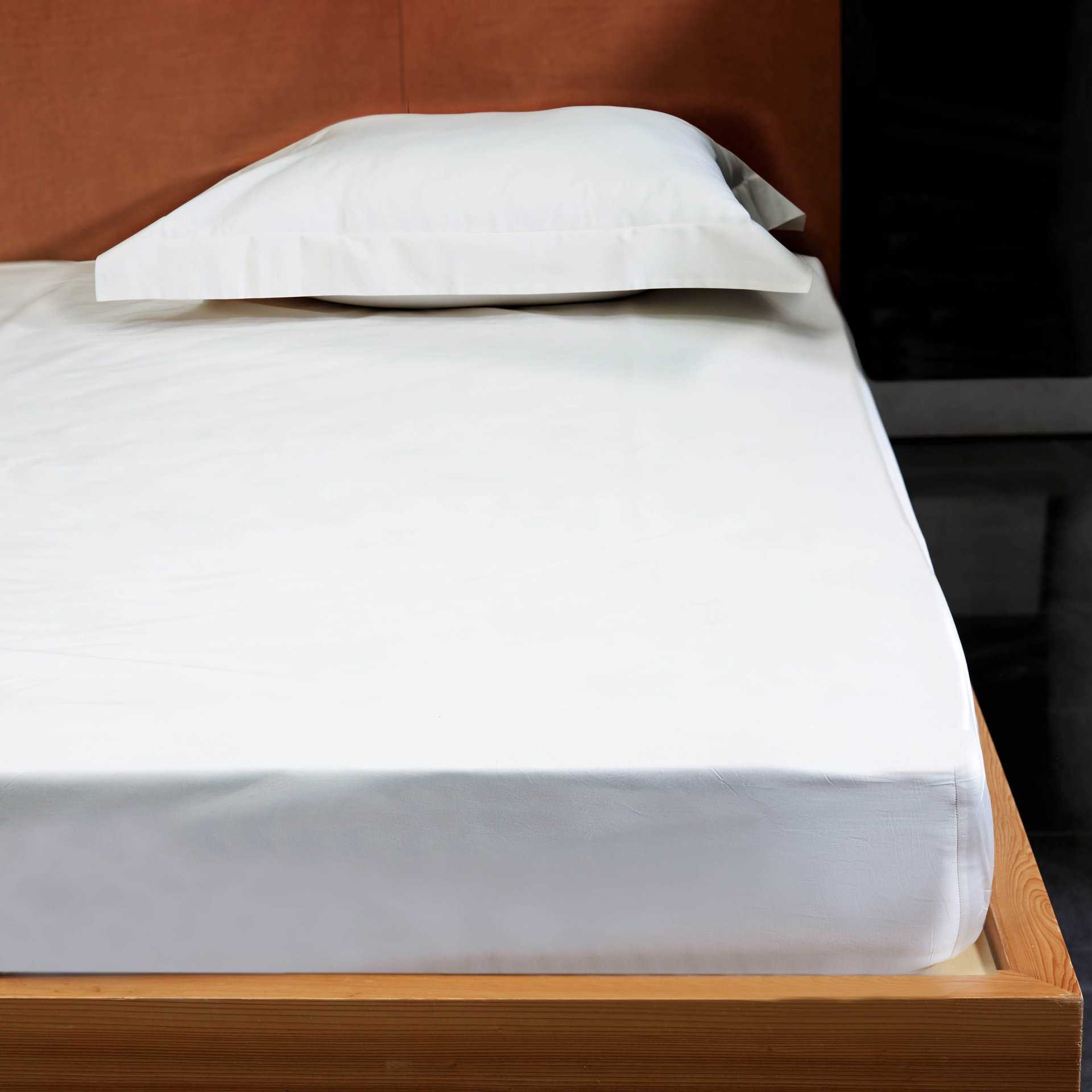
A well-fitted sheet should lie smooth across the mattress, stay tucked through the night, and accommodate every layer beneath it. The right pocket depth starts with one careful measurement: the full height of the surface you actually sleep on.
Shopping for sheets often begins with a familiar choice: cotton or linen, crisp percale or softly draped sateen. Yet even the most beautiful fabric can disappoint if the fitted sheet cannot reach beneath the mattress corners. When the pocket is too shallow, elastic may creep upward and expose the mattress. When it is far too deep, excess cloth can gather into folds that interrupt an otherwise composed bed.
The solution is practical, not mysterious. Measure the mattress from its base to the top sleeping surface, include any topper that will remain on the bed, then compare that figure with the fitted sheet’s stated pocket depth and maximum mattress height. A few minutes with a tape measure can make the difference between a neat, secure fit and nightly readjustment.
What “pocket depth” means
A fitted sheet has a central panel and elasticized corners designed to wrap around a mattress. “Pocket depth” generally describes how much height the sheet’s corners can cover. However, manufacturers do not always use the term identically: one may list the depth of the sewn corner, while another may provide a recommended maximum mattress height. Read the product specifications carefully rather than assuming every depth number represents the same measurement.
A listed pocket depth is not always a promise that the sheet will fit a mattress of exactly that height with generous fabric left to tuck underneath. Elastic, seam construction, mattress shape, and the way a brand defines its measurement all affect the result. If the listing gives a maximum mattress height, use that as the clearest fit reference. If it gives only pocket depth, compare it with your full mattress height and check the maker’s sizing notes or ask for clarification when the fit is close.
Measure the whole sleep surface
Mattress labels usually identify length and width, but those dimensions do not tell you whether a fitted sheet will reach around the sides. Height is the measurement that matters here. It should reflect the bed as it is used—not simply the mattress before it is dressed.
Use a firm tape measure and measure vertically from the mattress’s bottom edge or base to its upper sleeping surface. Keep the tape straight and avoid compressing the padding. For a pillow-top or visibly rounded mattress, take the measurement at the highest point of the top surface. If the mattress sits inside a frame or rests on a foundation, the frame’s height is not part of the fitted sheet measurement; the sheet needs to cover the mattress itself, not the bed frame.
A simple measurement checklist
- Remove existing bedding so the mattress edges are visible.
- Measure from the bottom edge of the mattress to the top surface.
- Repeat at more than one side if the mattress has a pillow top or uneven profile.
- Add the height of a topper that will stay on the bed.
- Include any other permanent layer that sits between the mattress and fitted sheet.
- Compare the final total with the sheet’s stated pocket depth and maximum mattress height.
A second measurement can be useful when a mattress has plush padding, softened edges, or a topper that compresses differently from the mattress itself. Small variations matter most when your total is close to the sheet’s stated limit.
Include a mattress topper in the calculation
A mattress topper adds height, sometimes enough to change which fitted sheet works. If you use one, place it on the mattress before measuring and measure from the bottom edge of the mattress to the topper’s upper surface. This gives you the combined height the fitted sheet must cover. Measuring the topper alone and then forgetting to add it to the mattress is an easy way to choose a pocket that is too shallow.
Consider the topper’s loft in its everyday condition. A thick, resilient topper may retain most of its height when someone lies on it; a softer layer may compress more. For sheet sizing, use the assembled bed’s uncompressed height as a practical starting point. Do not assume that a topper will flatten enough under a sleeper to make an undersized sheet fit securely.
For instance, if the mattress measures 12 inches high and a topper adds 3 inches, shop for a fitted sheet intended for a surface around 15 inches high, allowing for the manufacturer’s guidance and any required tuck. The arithmetic is straightforward; the important detail is to measure the complete stack rather than relying on the mattress’s original specification.
How much extra depth should you allow?
A fitted sheet needs to cover the mattress sides and reach far enough beneath them for the elastic to hold. The precise amount of extra fabric depends on the sheet pattern, elastic placement, mattress shape, and the maker’s sizing method. There is no universal allowance that applies to every brand. Treat the stated maximum mattress height as more useful than a generic rule of thumb, especially for a deep mattress or a bed with multiple layers.
If the product description gives a maximum height rather than a pocket-depth number, compare your measured total directly with that limit. If it lists only pocket depth, remember that the sheet must wrap down the sides and under the mattress edge; the number may not equal the maximum height it can accommodate. A brand’s fit chart or customer-service guidance can resolve that ambiguity.
When your measurement sits right at the listed maximum, a sheet with a little more capacity may be the safer choice. A mattress with rounded corners or a topper with soft, sloping edges can require more reach than a firm, square-edged mattress of the same measured height. Conversely, a sheet that is dramatically deeper than necessary may not provide the cleanest finish.
Why elastic and corner design matter
Depth is the first comparison, but it is not the only detail that determines whether a fitted sheet stays put. Elastic may run around the entire perimeter or be concentrated at the corners. Full-perimeter elastic can help draw the sheet evenly beneath the mattress, while corner-focused elastic can offer a secure hold when its placement and tension suit the bed. Neither construction guarantees a perfect fit on every mattress; the shape and dimensions still need to match.
Look for reinforced or generously shaped corners, clear sizing information, and details about elastic coverage. Some fitted sheets are designed with deeper corner pockets or a specific fit for thicker mattresses. A fitted edge that can stretch over the corners without being pulled taut is less likely to ride up. At the same time, a secure fit should not require excessive force, which may strain seams or elastic over time.
Mattresses with rounded profiles, pillow tops, or flexible edges can be more challenging than mattresses with a firm, squared-off shape. If your current sheets repeatedly pop off one corner despite matching the nominal mattress size, check the height and the corner construction—not just the label’s size category.
Recognizing a sheet that is too shallow
A shallow fitted sheet often announces itself quickly. The elastic may pull away from one or more corners, the lower mattress edge may become exposed, or the fabric may slide upward as you move. You might find yourself re-tucking the same corner each morning. Persistent tension can also make the top panel feel overly stretched rather than smooth.
Before replacing the sheet, check that it is positioned correctly: fitted-sheet labels or seams may indicate the intended orientation, and mattress corners should sit fully inside the pocket. But if the sheet is correctly aligned and still strains across the sides, compare its maximum recommended mattress height with the full height of the mattress and topper together. A mismatch is more likely than a problem with the way the bed is made.
A sheet that is too shallow should not be forced into place by stretching the elastic beyond its intended range. Repeated strain can affect the elastic and seams, while the sheet may continue to come loose. Choosing the correct pocket depth is a more reliable fix than trying to secure an undersized sheet with makeshift additions.
When a fitted sheet is too deep
Extra depth can seem like harmless insurance, but a very deep fitted sheet may leave slack fabric beneath the mattress. The excess can bunch into ridges, shift during sleep, or create an untidy surface. It may also make it harder to tell whether the corners are seated evenly.
Some flexible fabrics and designs accommodate a modest range of mattress heights comfortably. A sheet with a generous pocket is not automatically a poor choice; it becomes a concern when the corners do not hold the fabric taut or the unused material gathers below the mattress. Assess the fit on the bed rather than judging only by the product description.
A smooth, close fit is the aim—not a strained one and not an overly loose one. When possible, compare the stated height range with your measurement and choose the option that places your mattress comfortably within that range rather than at an extreme.
Fabric, weave, and fit are separate decisions
Fabric influences hand feel, appearance, and care, but it does not substitute for accurate sizing. Percale is often chosen for its crisp, matte character, while sateen tends to feel smoother and drape more fluidly. Linen offers a relaxed texture that softens with use. Each can make a beautiful bed, provided the fitted sheet’s dimensions suit the mattress.
For example, the Tuscan Dreams Fitted Sheet is made in Italy from long-staple cotton percale with a 400 thread count and elastic all around. Those details describe its fabric and construction; shoppers should still verify the applicable size and mattress-height guidance for the selected option before purchase. A premium weave cannot compensate for a pocket that is too shallow or too deep.
Likewise, thread count is not a measurement of pocket depth. A higher number does not inherently indicate a deeper fit, stronger elastic, or better compatibility with a topper. Keep the practical questions distinct: first confirm the size and depth, then choose the material and finish that suit your preferences.
Buying sheets for a bed with a topper
If a topper is part of your regular bedding arrangement, make it part of the sheet-shopping decision from the beginning. A sheet that fits the bare mattress may stop working after a topper is added, even when the mattress size—such as queen or king—has not changed. Mattress size describes the sleeping surface’s width and length; pocket depth addresses its height.
When comparing options, check whether the sheet is sold by mattress size and whether that size is available in more than one depth. Read the full specification for a maximum mattress height, pocket measurement, or named deep-pocket fit. If the listing is unclear, ask the retailer to confirm the maximum combined height for the mattress and topper.
If you rotate between a topper and no topper, one fitted sheet may not be ideal for both configurations. A deep sheet that accommodates the taller setup might be loose on the bare mattress. In that case, separate sheets for each arrangement can provide a more reliably smooth fit.
Care can help preserve a good fit
Even a correctly sized fitted sheet can change with repeated washing and drying. Follow the care label, avoid harsher conditions than the fabric allows, and take the sheet out of the dryer promptly when recommended. Excessive heat may affect some fibers or elastic components, while rough handling can add unnecessary stress to seams and corners.
When making the bed, orient the sheet correctly and seat each corner fully before moving to the next. If the sheet has a label indicating the foot of the bed, use it. Smooth the top panel and check that the elastic edge rests evenly beneath the mattress. A consistent routine makes it easier to notice whether a fit issue is caused by placement or by insufficient depth.
If a sheet that once fit well begins to loosen, consider whether the mattress or topper has changed, whether the elastic has relaxed, and whether the care instructions have been followed. The mattress dimensions printed on a label may not reflect a later change in bedding layers.
Common fitting mistakes to avoid
- Measuring only the mattress label. Product labels often give length and width, not the actual height of a padded mattress.
- Forgetting the topper. The fitted sheet must cover the combined height of the mattress and any layer that remains beneath it.
- Assuming pocket depth and maximum height are identical. Check how the manufacturer defines each measurement.
- Choosing by bed size alone. A queen sheet can still be too shallow for a tall queen mattress.
- Ignoring corner shape and elastic placement. Construction can affect how securely a sheet stays in place.
- Trying to stretch an undersized sheet into service. A strained fit may repeatedly come loose and place unnecessary stress on its seams.
A quick decision sequence
Approach the choice in order. First, confirm the mattress’s length and width so you select the right standard size. Next, measure its height from bottom edge to top surface. Add the height of the topper and any other permanent layer. Finally, compare the combined figure with the fitted sheet’s stated maximum mattress height, checking the brand’s explanation of pocket depth if the terms are unclear.
After the sheet arrives, test it on the fully assembled bed. Each corner should reach beneath the mattress without excessive pulling, and the elastic should remain in place when the surface is smoothed. The top should feel even, with no tight diagonal strain and no surplus fabric gathering into folds. That first practical check confirms whether the measurements translate into the fit you wanted.
The takeaway
Matching a fitted sheet to mattress depth is a matter of measuring the bed as it is actually used. Include the topper, check the sheet’s pocket depth and stated maximum height, and pay attention to elastic and corner design. With those details in hand, it is easier to find a fitted sheet that stays secure, lies smooth, and lets the chosen fabric feel as good as it looks.